

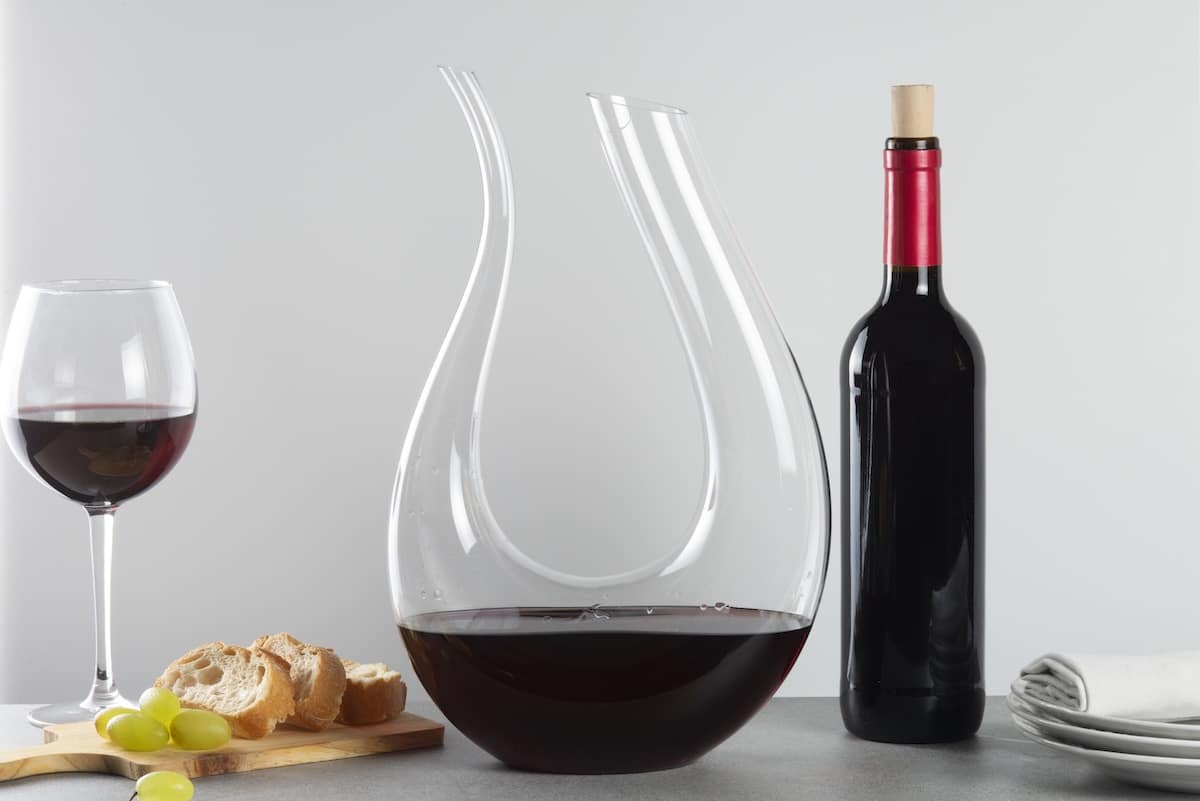
Bringing out a fine crystal decanter always impresses at the table. But aerating a wine is not only a matter of elegance: it is a technical gesture that can elevate a bottle, or spoil it. Aerating, decanting: two words often confused when they answer opposite needs. Here is the explanation.
Aerating and decanting: two opposite gestures
Same object, opposite intent. Aerating oxygenates a young wine to open it up; decanting separates an old wine from its sediment, while limiting oxygen.
Which wines should be aerated?
| Type of wine | Recommended gesture | Duration |
|---|---|---|
| Young & tannic red | Aerating (wide decanter) | 1 to 2 h |
| Old red (10 years and over) | Decant just before serving | 15–30 min max |
| Rich / age-worthy white | Light aeration | 15–30 min |
| Crisp white, rosé, sparkling | None, serve as is | — |
How long, in practice?
There is no absolute rule: a wine opens at its own pace. The best judge is your nose. Taste as soon as you pour into the decanter, then every 15 minutes: you will feel the aromas unfold and gain roundness. As soon as the wine reaches its aromatic peak, serve. It is also an excellent exercise to develop your palate.
The mistakes not to make
- ✔ Do not aerate an old vintage: its fragile bouquet evaporates within minutes in contact with air.
- ✔ Avoid aerating delicate whites and sparkling wines: they lose freshness and bubbles.
- ✔ Do not decant too early: an old wine decanted an hour ahead can fade in the decanter.