

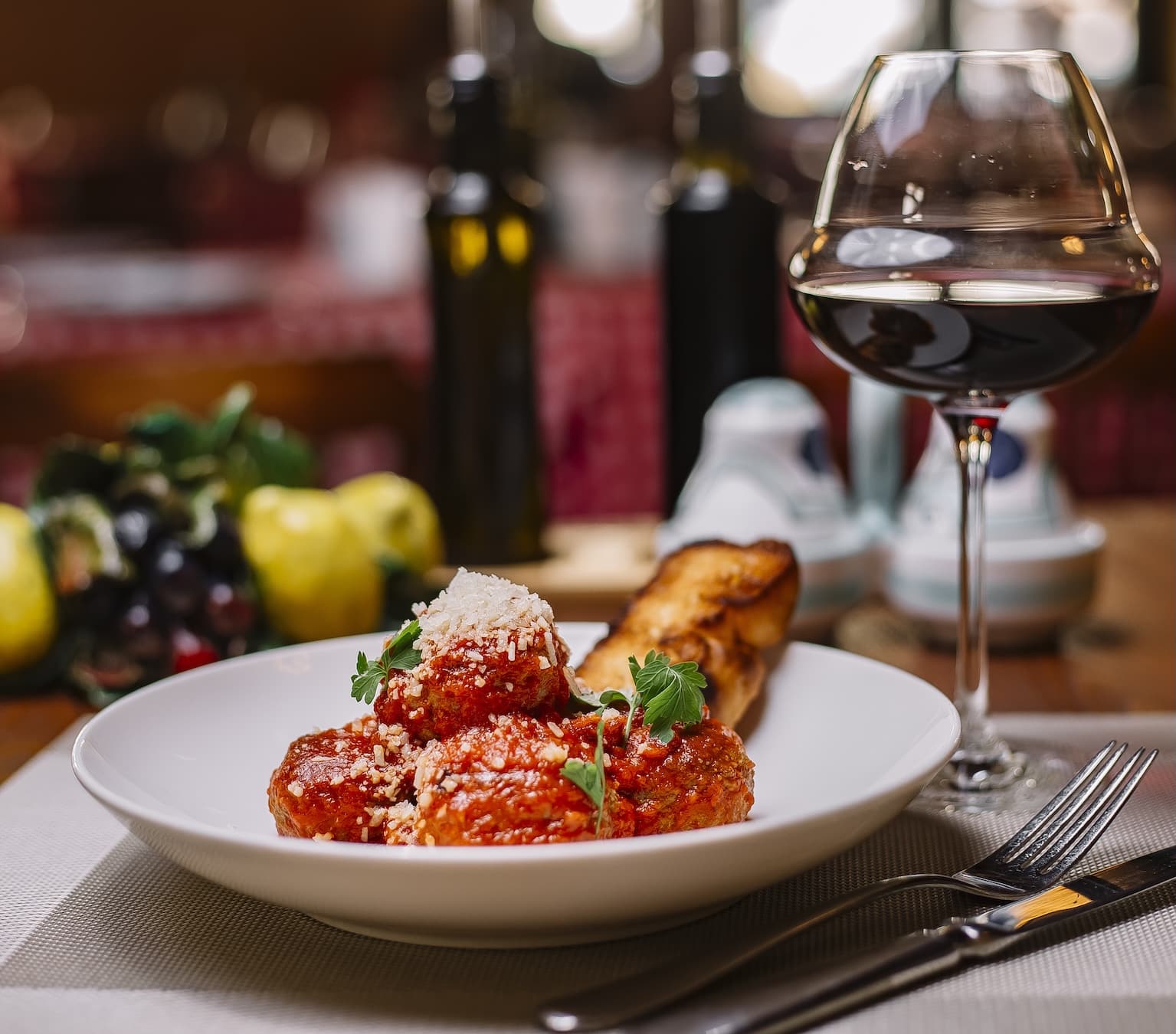
Do you really need a white wine with fish? A powerful red with cheese? Food and wine pairing feeds as many certainties as received ideas. The good news: a few simple principles are enough to build sound pairings, without being a sommelier. Here is our visual guide to turn every meal into a real tasting.
The 3 great principles of pairing
A good pairing rests on one founding idea: neither the dish nor the wine should overwhelm the other. To achieve this, you play on three complementary levers.
1. Harmony
Match similar intensities: a delicate dish with a light wine, a rich dish with a powerful wine. The weight of the wine should equal that of the plate.
2. Contrast
Oppose to balance: the acidity of a white cuts through the fat of a fish, a sweet wine answers the saltiness of a blue cheese. Contrast wakes up the flavours.
3. Terroir
“What grows together goes together”: a regional dish almost always matches a wine from the same region. A safe bet when in doubt.
The pairing matrix
This table gives reliable benchmarks for the main families of dishes and wines. Keep it handy when choosing your bottle.
| Dish / Wine | Dry white | Rosé | Light red | Full-bodied red | Sweet |
|---|---|---|---|---|---|
| Seafood & fish | ● | ● | ○ | ○ | ○ |
| Poultry & white meats | ● | ● | ● | ● | ○ |
| Red meats & game | ○ | ● | ● | ● | ○ |
| Cheeses | ● | ● | ● | ● | ● |
| Desserts & fruit | ○ | ○ | ○ | ○ | ● |
Pairings that work every time
- ✔ Oysters & a crisp dry white: the iodised tension calls for a lively, mineral wine.
- ✔ Ribeye steak & a full-bodied red: the tannins melt into the fat and proteins of the meat.
- ✔ Blue cheese & a sweet wine: sweetness softens the powerful saltiness, the contrast pairing par excellence.
- ✔ Aperitif & sparkling or rosé: freshness and lightness open the appetite without saturating the palate.
Pitfalls to avoid
- ✔ A wine sweeter than the dessert — otherwise the wine tastes dull. The wine should always be at least as sweet as the plate.
- ✔ Beware tannins with fish: the combination gives an unpleasant metallic taste.
- ✔ Be wary of very vinegary or very spicy dishes, which overwhelm most wines.
Don’t forget temperature and length
The same pairing can succeed or fall flat depending on how the wine is served. A red served too warm will seem heavy, a white served too cold will lose its aromas: find out at what temperature to serve each wine. And to judge whether a pairing works, trust the length on the palate: a great pairing lingers, a poor one cuts off sharply.
Going further
Want to progress in the art of tasting? Our other articles guide you step by step:
- Introduction to wine tasting: the practical guide to tasting like a pro
- How to develop your palate and recognise aromas
- At what temperature should you serve wine?
Discover the wines of Château d’Arsac to put these pairings into practice at your next meal.