

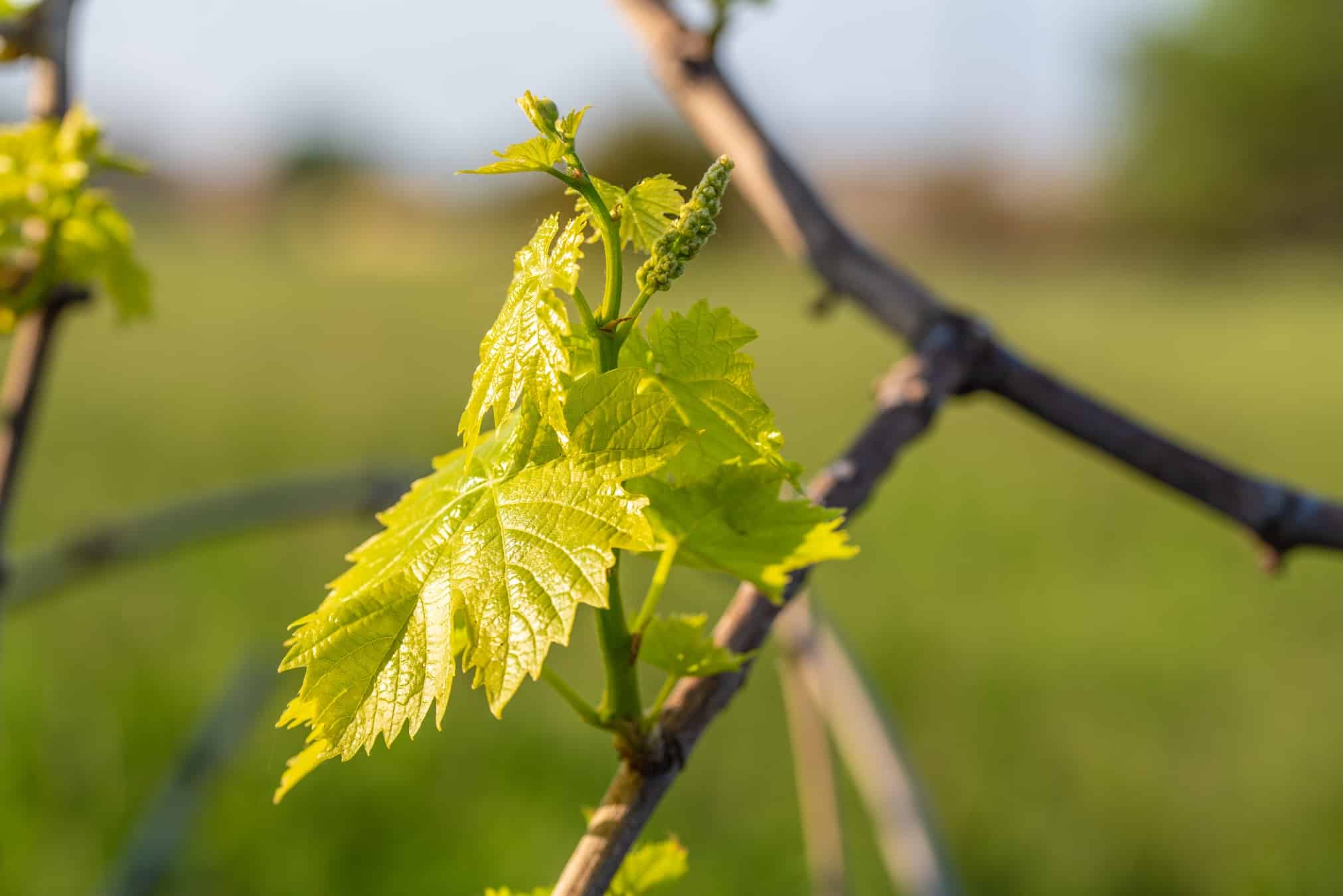
Bordeaux mixture takes its name from the region where it was developed, in the Bordeaux vineyards, at the end of the 19th century. More than a century later, this copper-based mix remains the organic grower’s main tool against downy mildew, the disease that can ruin a harvest in a few humid days. Copper nonetheless raises a basic question: effective and mineral in origin, it also builds up in soils and is increasingly regulated. Understanding its role sheds light on much of the debate around organic wine. This article explains what copper does in the vineyard, what the regulations allow, and which alternatives are emerging.
Why copper remains essential in organic farming
Downy mildew is a fungus that spreads in humid weather and attacks both leaves and grape bunches. Copper acts as a contact fungicide: it protects the surface of the foliage and limits the disease taking hold.
In organic farming, synthetic products are banned. Against downy mildew, copper is often the only truly effective option. Bordeaux mixture combines copper sulphate and lime, which gives it its characteristic blue colour.
What the regulations say
Copper use is capped at European level. The principle rests on a total dose calculated over several years, in order to smooth treatments according to mildew pressure.
| Rule | Detail |
|---|---|
| European limit | 28 kg of copper metal per hectare over 7 years (EU Regulation 2018/1981) |
| Annual average | about 4 kg/ha/year, with smoothing allowed from one year to the next |
| Organic and conventional | same conditions of use since December 2019 |
| Status of copper | substance approved in the EU, extended until 31 December 2029 |
The sensitive point: build-up in soils
Copper is a metal: it does not break down. Part of it falls to the ground after each treatment and accumulates over the years. At high concentration, it can affect soil life, from earthworms to micro-organisms.
This build-up explains the gradual reduction of authorised doses and the current regulatory pressure. For the organic grower, the challenge is to protect the vine without overloading the soil.
The alternatives under study
No single solution replaces copper against downy mildew today. Several avenues are nonetheless progressing and combine with one another.
- ● Phosphonates: effective, but their status in organic farming is still debated at European level.
- ● Plant defence stimulators: they strengthen the vine’s natural defences at early stages.
- ● Antagonistic micro-organisms: they compete with the fungus responsible for downy mildew.
- ● Prophylaxis: pruning, leaf removal and canopy aeration limit the humidity the disease favours.
- ● Tolerant grape varieties: some varieties resist downy mildew better and reduce the need for treatment.
The most robust strategy combines these levers with reduced copper doses, adjusted to the weather and the real pressure of the disease.
Frequently asked questions
Is Bordeaux mixture allowed in organic farming?
Yes. Copper is allowed in organic farming, within the European limit of 28 kg per hectare over seven years. Since December 2019, its conditions of use are the same as in conventional farming.
Is copper harmful to the environment?
At low doses, it protects the vine. But because it does not break down, it accumulates in soils and can, at high concentration, affect soil life. This build-up is what justifies regulating its use.
Can vines be grown organically without copper?
Not yet in a reliable way against downy mildew. Alternatives exist, but they combine with copper rather than fully replacing it.
Going further
Copper sums up the reality of organic wine: demanding specifications, concrete constraints and a constant search for balance. Our article on organic wines details the specifications, while biodynamics takes the logic of living soils even further.
Château d’Arsac, in the Margaux appellation, shares this attention to the vine and the soil.