

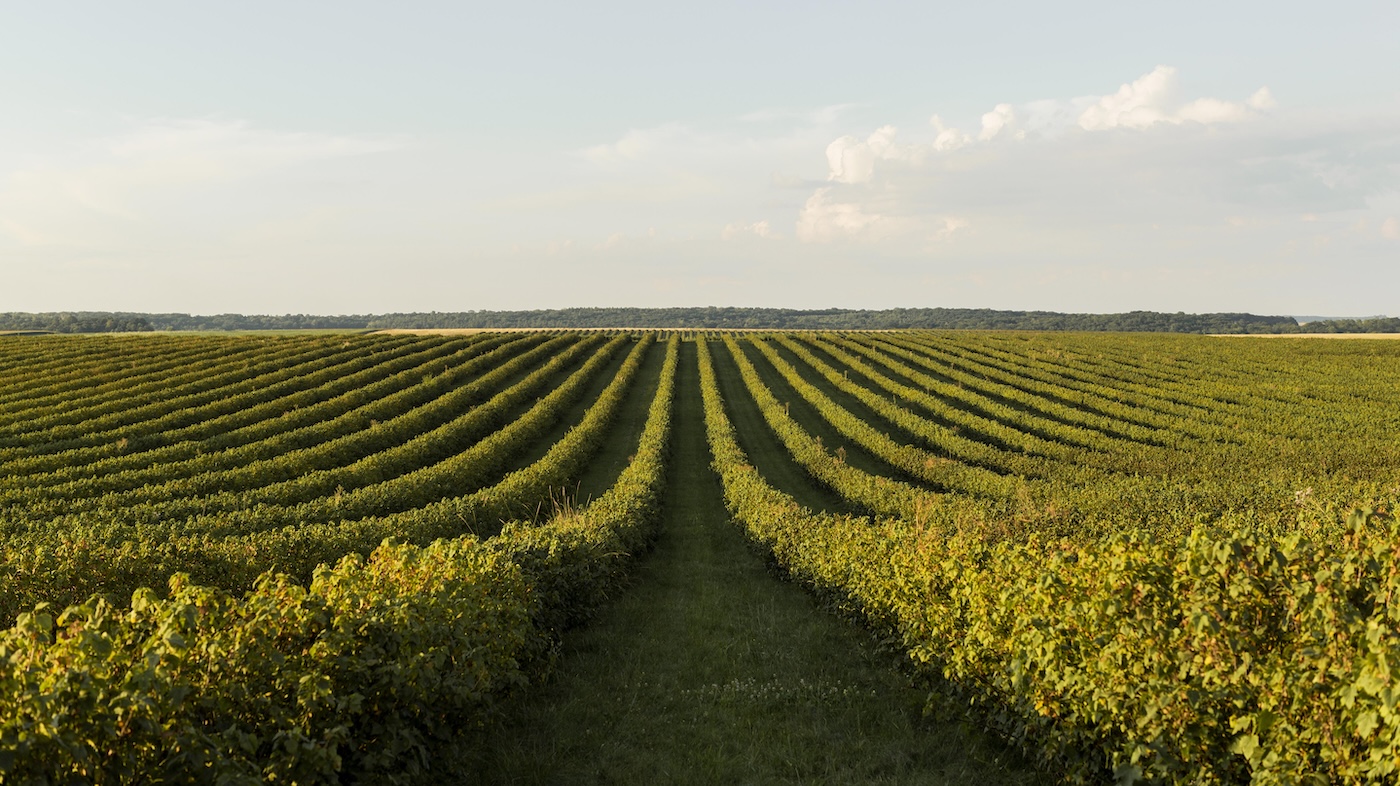
Wine is born long before the cellar. It is born in the vine, along a regular growing cycle that is never quite the same from one year to the next. Bud break, flowering, fruit set, veraison, ripening: so many stages that turn a simple plant into a source of emotion and culture. Understanding these stages brings a more sensitive eye to what we taste.
Winter (December to February): dormancy
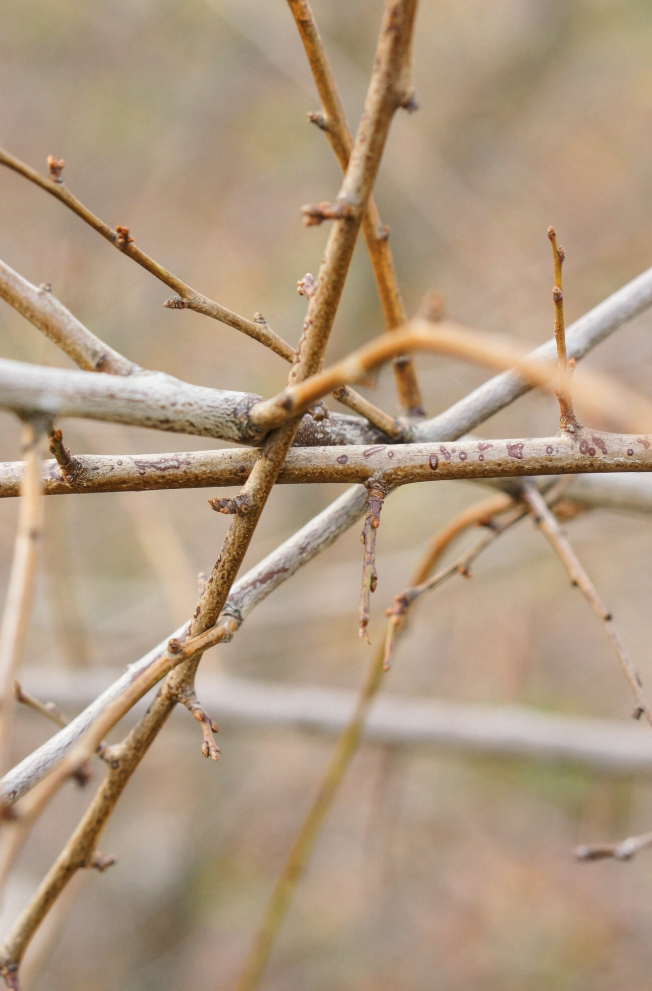
During winter, the vine enters its resting phase, also called winter dormancy. Silent in appearance, this period is crucial for the cycle. Without enough heat and light, the plant stops all visible activity. The foliage has fallen, the grapes have been harvested, the canes are bare, and the sap has descended into the roots to shelter from frost.
This rest lets the vine rebuild its reserves after the intense effort of fruiting and ripening. It goes into a lethargy comparable to hibernation in some animals: everything is paused to restart better in spring. The cold is paradoxically beneficial: it limits the spread of diseases and pests by destroying their eggs and spores. A hard winter can therefore be healthy for the vine.
Spring (March to May): bud break and flowering
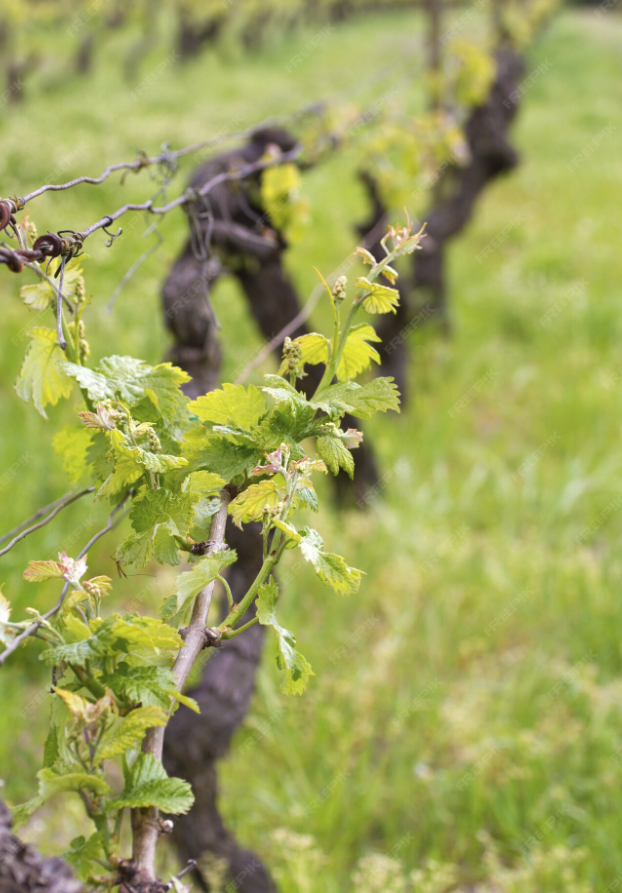
With the return of fine weather, the vine emerges from its winter torpor. When temperatures regularly exceed 10°C, a striking phenomenon signals the restart of the cycle: the “weeping”. Drawn by the warmth, the sap rises from the roots to the tips of the pruned canes and flows from the cuts: the vine seems to weep. It is the first visible sign of renewed activity.
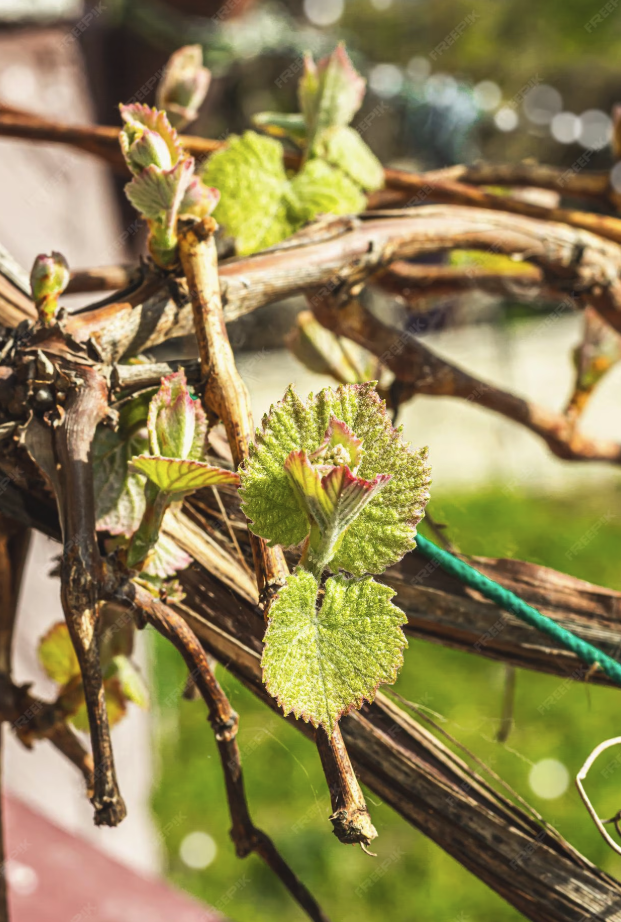
A few days after the weeping, the buds swell and open: this is bud break. Tender green shoots appear and will give the branches, mature leaves and future flower clusters. Bud break is one of the most critical moments of the year: the young shoots are extremely sensitive to spring frosts, which can wipe out a whole harvest in a few hours.
Flowering (late May to early June)
If the climate stays favourable, the vine keeps growing and enters flowering. Tiny, discreet white flowers form at the tip of the young shoots. They will give the berries (the future grape clusters) if they are well fertilised. Flowering depends greatly on the weather:
- Dry, warm and low-wind weather is ideal.
- Rain or cold can cause “coulure”: the flowers abort and do not turn into fruit.
- Wind can hinder pollination, which in the vine is self-fertilising (the flower fertilises itself).
Spring is the season of renewed growth. Everything is decided then: a harmonious bud break and a successful flowering set the quantity and quality of the future clusters.
Summer (June to August): growth and concentration
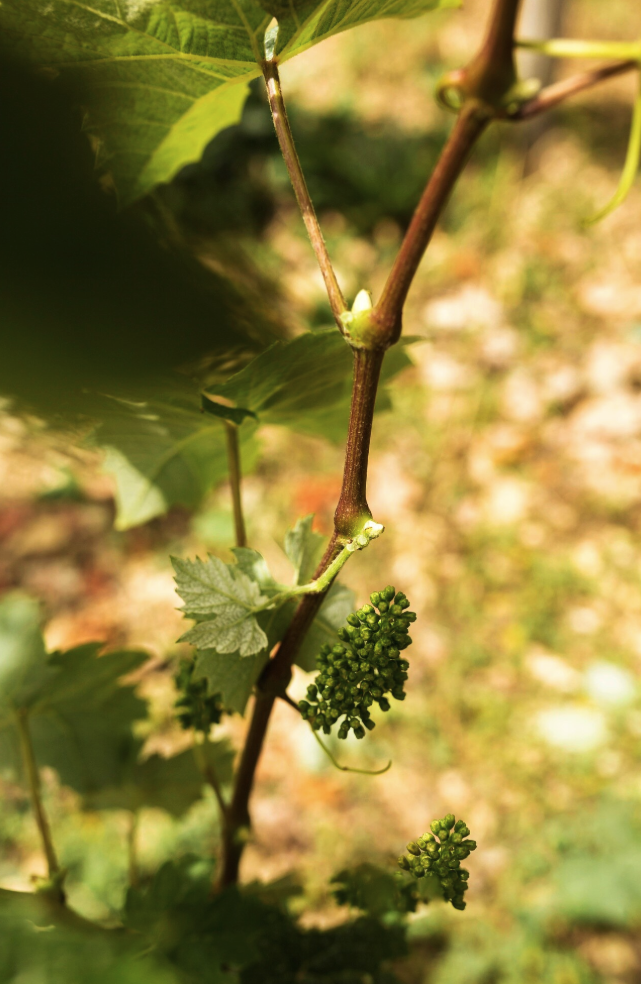
Summer is a period of full physiological activity. After flowering, if fertilisation succeeded, the flowers give small green berries: the start of a slow, spectacular transformation.
Fruit set (late June / early July)
Fruit set is the transformation of fertilised flowers into young fruit. The berries form in place of the flowers and begin to grow. At this stage they are still small, green and hard, rich in acids and without sugar. This phase is decisive: it determines the number and volume of the future grapes. Any stress (climatic, sanitary or water-related) can disrupt it and cause coulure or millerandage (small, seedless berries).
Veraison (mid-July to August)
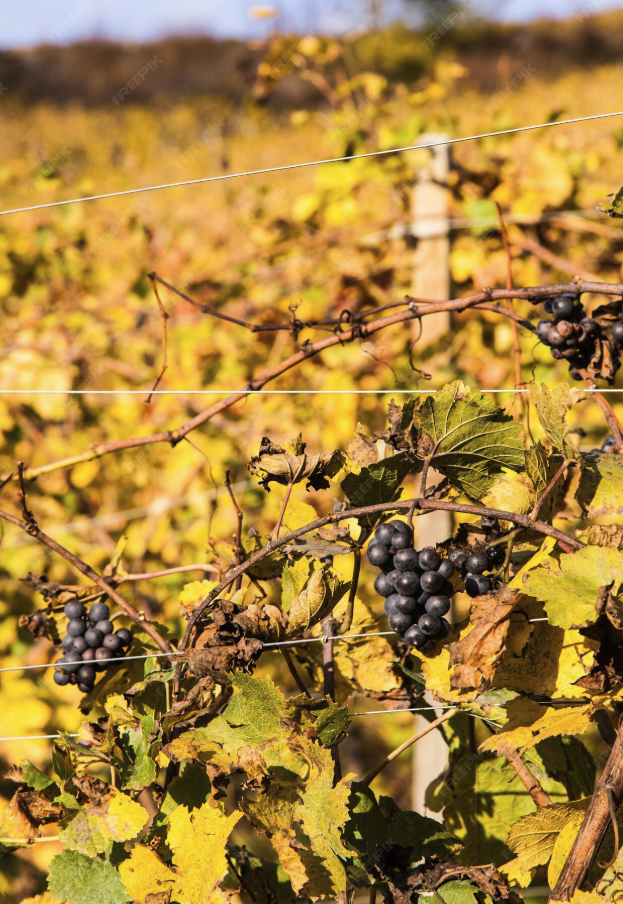
Around mid-summer, the grapes begin a gradual colour change: red varieties turn from green to pink then deep purple, white varieties from green to golden yellow. This is veraison, also the start of ripening: sugar rises, acids fall, the grape’s specific aromas develop, and phenolic compounds (tannins, anthocyanins) build up in the skin.
Veraison does not happen uniformly: it can spread over several days or weeks depending on the varieties, the exposure and the weather.
Autumn (September to November): ripeness and harvest
During this period, growers watch the berries very closely, because the moment of harvest directly shapes the style and quality of the final wine. It is not only about picking ripe grapes, but choosing the optimal moment to reach the desired profile, whether a dry, sweet, sparkling or age-worthy wine. Several analytical and sensory criteria are assessed:
- Varietal aromas: their expression hints at the grape’s typicity and the future wine’s complexity. Berries are tasted regularly.
- Sugar content: measured in grams per litre, it estimates the wine’s potential alcohol.
- Total acidity and pH: too low gives a flat wine, too high a hard one; balance is essential.
- Phenolic ripeness: the tannins (in pips, skin and stems) and anthocyanins (colour in reds) must be ripe, supple and not astringent.
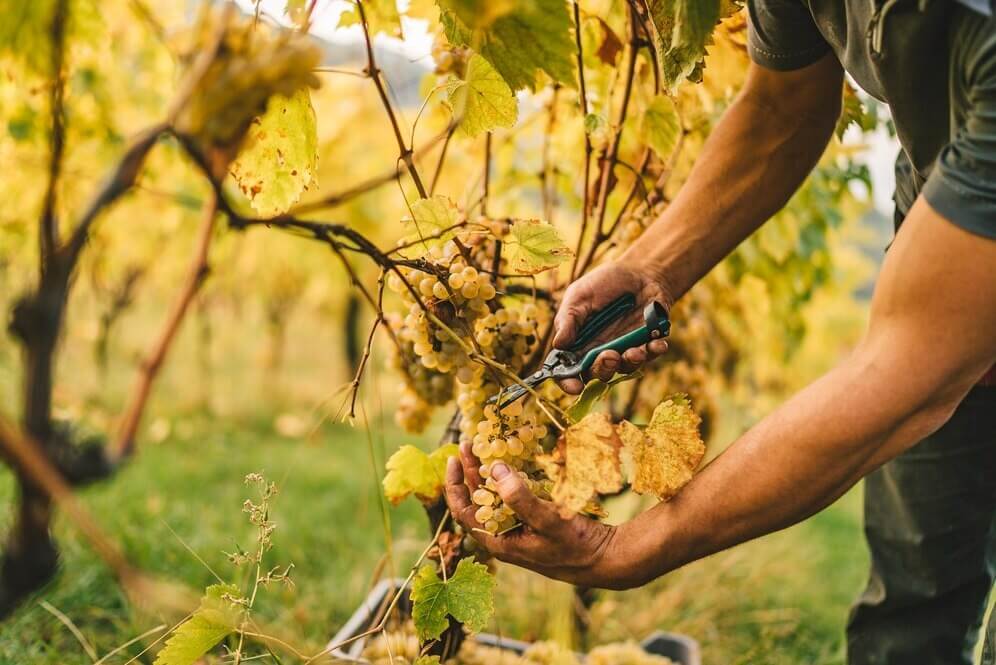
After the harvest, the vine enters pre-dormancy. The leaves fall, the sap descends, and the cycle begins again.
Château d’Arsac, in the Margaux appellation, lives this cycle season after season across its Médoc vines.