


Enjoying a wine is not only about drinking it: it is about taking the time to look at it, smell it and savour it. Tasting is an art open to everyone, which can be discovered step by step, even without technical training. This guide offers a simple, clear introduction, so every glass becomes a rich and pleasant sensory experience. Follow it to learn to recognise aromas, understand flavours and get to know the emblematic grape varieties.
The three fundamental steps of tasting
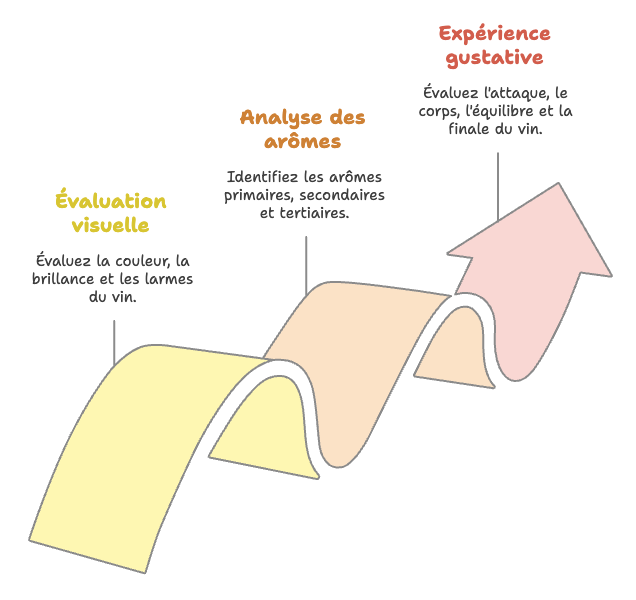
The eye: the first impression comes from the wine’s colour, the “robe”. Observe its hue (pale yellow, gold, ruby, garnet), its brightness and clarity. Swirl the wine in the glass: slow “legs” can indicate a certain richness in alcohol or sugar.
The nose: bring the glass to your nose without swirling: this is the “first nose”. Then swirl gently to release the aromas: the “second nose”. There are three types of aroma:
- Primary: linked to the grape (fruit, flowers, vegetal notes).
- Secondary: from fermentation (bread, yeast, butter).
- Tertiary: developed with ageing (leather, spices, undergrowth).
The palate: take a small sip and let the wine spread. Note the attack (soft, lively), the body, the balance between acidity, alcohol and tannins (for reds), and the persistence (the “finish”). A good wine leaves a lasting imprint.
Recognising the aromas and flavours of wine
Wine is a concentrate of aromas. To train, use aroma wheels or regularly smell fruit, spices and flowers.
Common aroma families
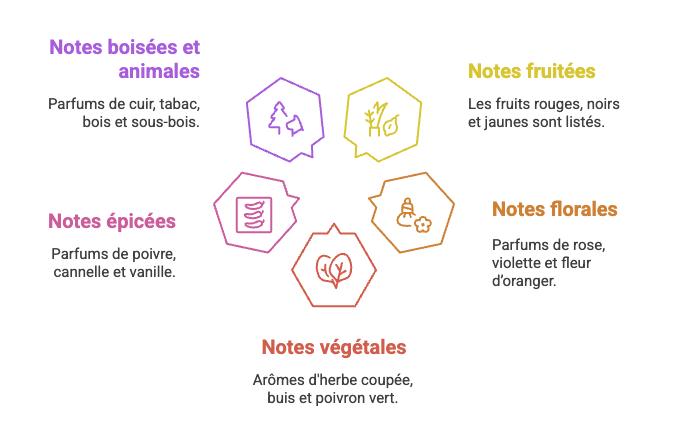
- Fruity: red fruits (cherry, raspberry), black (blackcurrant, blueberry), yellow (peach, apricot).
- Floral: rose, violet, orange blossom.
- Vegetal: cut grass, boxwood, green pepper.
- Spices: pepper, cinnamon, vanilla.
- Woody and animal: leather, tobacco, wood, undergrowth.
Flavours to spot on the palate
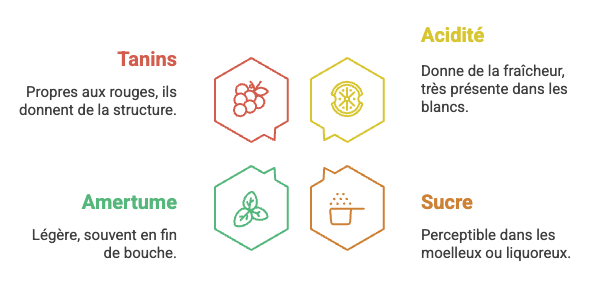
- Acidity: brings freshness, very present in whites.
- Sugar: perceptible in sweet and dessert wines.
- Bitterness: light, often on the finish.
- Tannins: specific to reds, they give structure (dry, astringent).
Practical cards: the great grape varieties and their tasting profiles
To go further and develop your palate, it helps to get to know the great grape varieties. Each has specific aromatic signatures that, with experience, allow you to recognise them blind. Here are the main ones and the aromas often associated with them:
- Chardonnay: citrus, green apple, butter, hazelnut, brioche (depending on ageing).
- Sauvignon Blanc: lemon, boxwood, grapefruit, exotic fruit.
- Riesling: lime, white flowers, mineral notes, sometimes “petrol” with age.
- Viognier: apricot, peach, orange blossom, honey.
- Pinot Noir: cherry, strawberry, undergrowth, sweet spices.
- Merlot: plum, black fruits, chocolate, mild tobacco.
- Cabernet Sauvignon: blackcurrant, pepper, cedar, liquorice.
- Syrah: violet, black pepper, blackberry, black olive.
Practical tips for getting started
You do not need to be an oenologist to taste well. A little method, curiosity and practice are enough to progress quickly.
- Organise a tasting at home: 3 to 5 different wines, of the same colour but from varied regions or grapes.
- Use a tasting notebook: note the robe, nose, palate and overall impression.
- Prepare your environment well: no interfering smells, good light, properly suited wine glasses.
- Master the serving temperature: 8–10°C for crisp whites, 16–18°C for structured reds.
- Taste often, but in moderation: regularity refines the palate.
Tasting is a pleasure that is learned and refined. By knowing the keys to reading a wine, spotting the aromas and understanding the sensations on the palate, you turn every glass into an experience. Wine then becomes a language, an emotion, a journey. And like any language, the more you practise, the more you understand.
Ready for your first real tasting? Discover the wines of Château d’Arsac, in the Margaux appellation.